
20 January 2021 · Press | Media · Reviews
«FANDANGOS Y TONADILLAS FUSIONA NUESTRO PATRIMONIO DE MÚSICA, TEATRO Y DANZA»
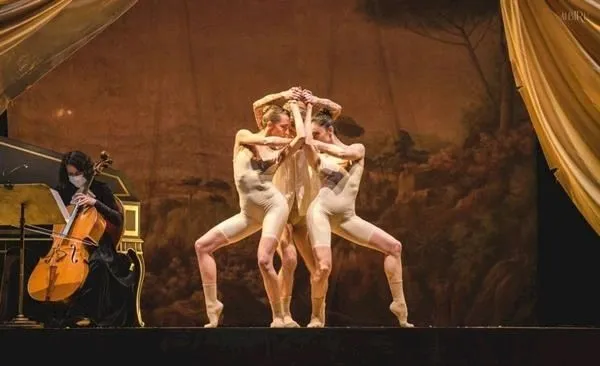
‘Fandangos y Tonadillas’. Works by Luigi Boccherini, Blas de Laserna, Antonio Soler, Luigi Marescalchi and Pablo Esteve. Season of the Compañía Nacional de Teatro Clásico (co-production with the Compañía Nacional de Danza). Teatro de la Comedia, Madrid. 16 January 2021.
The compact ensemble of period instruments led by Alicia Lázaro showed its professionalism throughout, while also keeping the much-coveted tactus steady so that the dancers could practise their art without a care. Silvia Márquez stood out in particular at the harpsichord, performing the fabulous Fandango in D minor by Padre Antonio Soler. She mastered the elaborate variations and displayed an impeccable regularity of touch, which was a delight for the splendid solo improvisations of the four dancers.
REVIEW
RITMO | 20/01/2021 | Simón Andueza A new and extraordinary meteorological phenomenon brought the city of Madrid, among many others in Spain, to the brink of collapse. Its name, Filomena, which some curiously translate as ‘lover of song’ and which is the poetic name for the nightingale, will remain etched in our memory for ever. Among the many cultural events cancelled or postponed that this little songbird put in serious jeopardy were the production and premiere of Fandangos y Tonadillas, a formidable show co-produced by the Compañía Nacional de Teatro Clásico (CNTC) and the Compañía Nacional de Danza (CND), which for the first time builds a show on Spanish music of the eighteenth century and its dances, fused through an ingenious theatrical script that turns it into a truly total spectacle.The inseparable interplay between music and theatre in eighteenth-century Spain is perfectly illustrated by the sainete, a theatrical piece with a few sung stanzas, and the tonadilla escénica, an elaborate musical genre that includes small theatrical numbers. Taking both genres and their most representative authors as a basis – Ramón de la Cruz for the sainete, and Blas de Laserna and Pedro Este for the tonadilla – Alicia Lázaro and Laura Ortega were responsible for uniting both worlds in a modern show, together with the choreographers Mar Aguiló and Pau Aran.
The performance consisted of eight scenes, each based on a different piece of music, which were joined by the libretto into a single work. It began with La Fiesta, in which the actor Ángel Ruiz introduced us, through a reflective yet comic monologue, to his inner world, which urges him to feel duty-bound to celebrate, since “a party is like an oasis in the desert of apathy”, in his own words. A veritable declaration of intent, it gave way to the remaining musical, dance and theatrical numbers, all of them celebrating festivity and life, something more necessary and longed-for now than ever, with one common thread: the wait for a celebrated Italian tenor who never arrives, which gave rise to all manner of entanglements and comic situations.
Alicia Lázaro, a tireless researcher of our musical heritage and a veteran connoisseur of the world of theatre with music, transcribed most of the extraordinary scores we were able to savour, apart from those by Boccherini and Soler.
Among the vocal soloists, we would single out María Hinojosa’s performance of Laserna’s complex tonadilla Las Murmuraciones del Prado, composed expressly for the celebrated singer María Mayor Ordóñez, which contains melodies of wide vocal range and difficult coloraturas that posed no problem whatsoever for the soprano. Her diction of the convoluted text was always intelligible, and the mocking character she brought to this satirical piece was formidable.
The one who left the audience open-mouthed with his qualities as a comic tenor was Ángel Ruiz in the tonadilla Arbitrio para comer by Pablo Esteve, showing generous volume, perfect intonation and absolute command of prosody and its comic and expressive resources, with the hilarious and truly complex cadenza of his aria and the closing seguidillas of the piece particularly outstanding.
The compact ensemble of period instruments led by Alicia Lázaro showed its professionalism throughout, while also keeping the much-coveted tactus steady so that the dancers could practise their art without a care. Silvia Márquez stood out in particular at the harpsichord, performing the fabulous Fandango in D minor by Padre Antonio Soler. She mastered the elaborate variations and displayed an impeccable regularity of touch, which was a delight for the splendid solo improvisations of the four dancers.
In this regard, the dancers of the Compañía Nacional de Danza left an ever-expectant and playful audience marvelling. Particularly noteworthy was Mar Aguiló’s formidable and sensual choreography to Boccherini’s Fandango in D major, performed by Iker Rodríguez, Sara Fernández and Mar Aguiló herself.
In short, a delightful, entertaining and multidisciplinary evening, worthy of every praise, which enchanted the whole audience gathered in our Teatro de la Comedia. Let us hope it is the first of many. Thank you, Compañía Nacional de Teatro Clásico and Compañía Nacional de Danza.
María Hinojosa and Cecilia Lavilla, sopranos. Ángel Ruiz and Rafa Castejón, actors and comic tenors. Sara Fernández, Yoko Taira, Iker Rodríguez, Mar Aguiló and Isaac Montllor, dancers. Beatriz Amezúa and Marta Mayoral, violins; Laura Salinas, cello; José Ignacio Gavilanes and Silvia Márquez, harpsichord. Alicia Lázaro, baroque guitar and musical direction. Laura Ortega, stage direction. Mar Aguiló and Pau Aran, choreography.
LINKS
Review in Ritmo: Fandangos y tonadillas fuses our heritage of music, theatre and dance