
19 January 2021 · Press | Media · Reviews
«FANDANGOS AND TONADILLAS: DANCE, MUSIC AND DECLAMATION WITH THE JOCULAR-SENSUAL SPIRIT OF THE SPANISH 18TH CENTURY»
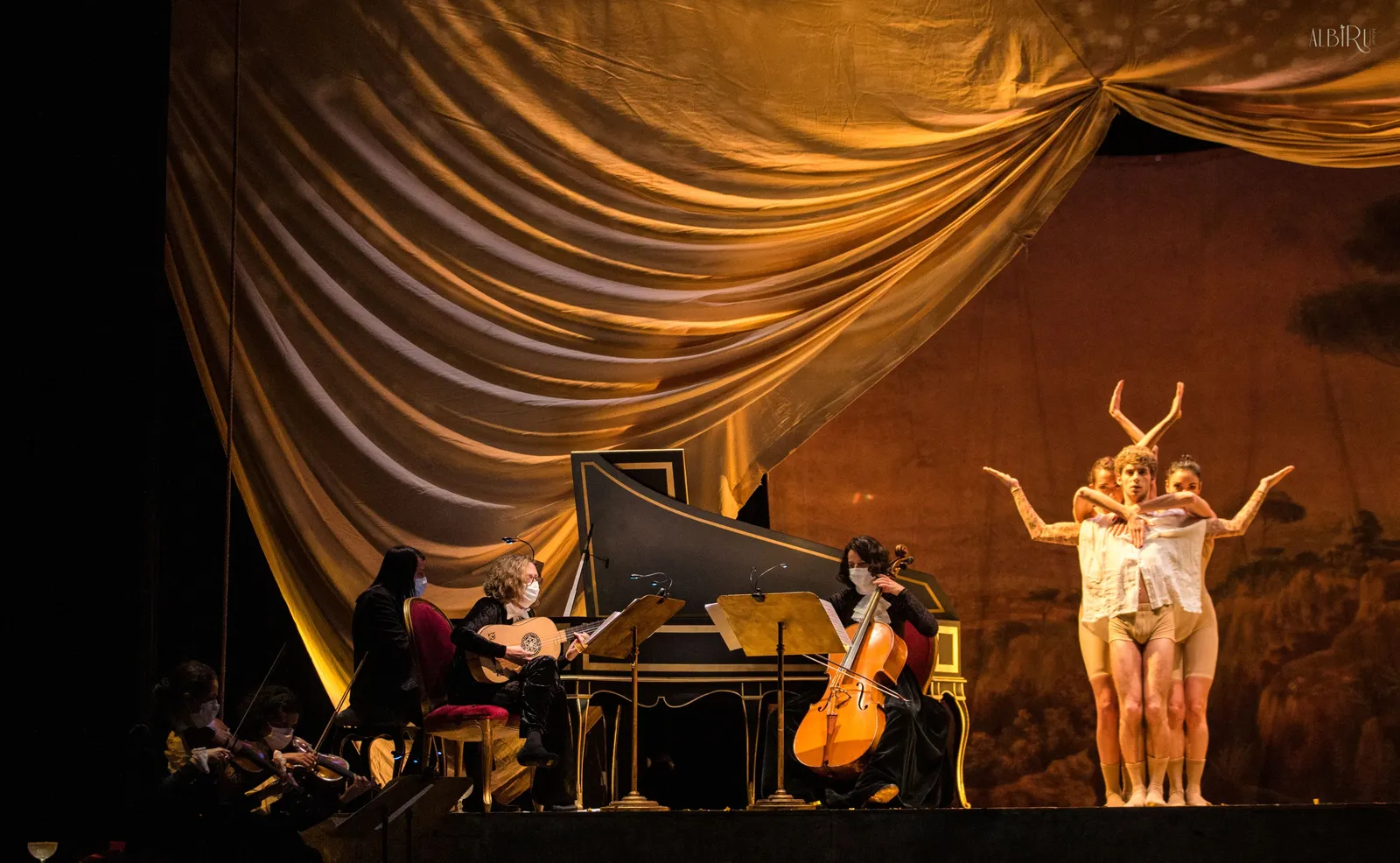
17 January, Madrid, Teatro de la Comedia
Directed on stage by Laura Ortega and musically by Alicia Lázaro, Fandangos y tonadillas is a playful, sensual visit to the spirit of eighteenth-century Spain, in which the music of Boccherini, Blas de Laserna, Pablo Esteve and Antonio Soler is set within a staging of no defined time, no specific period. Also on stage, the superb playing of the sextet of strings and harpsichords made up of Beatriz Amezúa, Marta Mayoral, Laura Salinas, Alicia Lázaro, José Ignacio Gavilanes and Silvia Márquez.
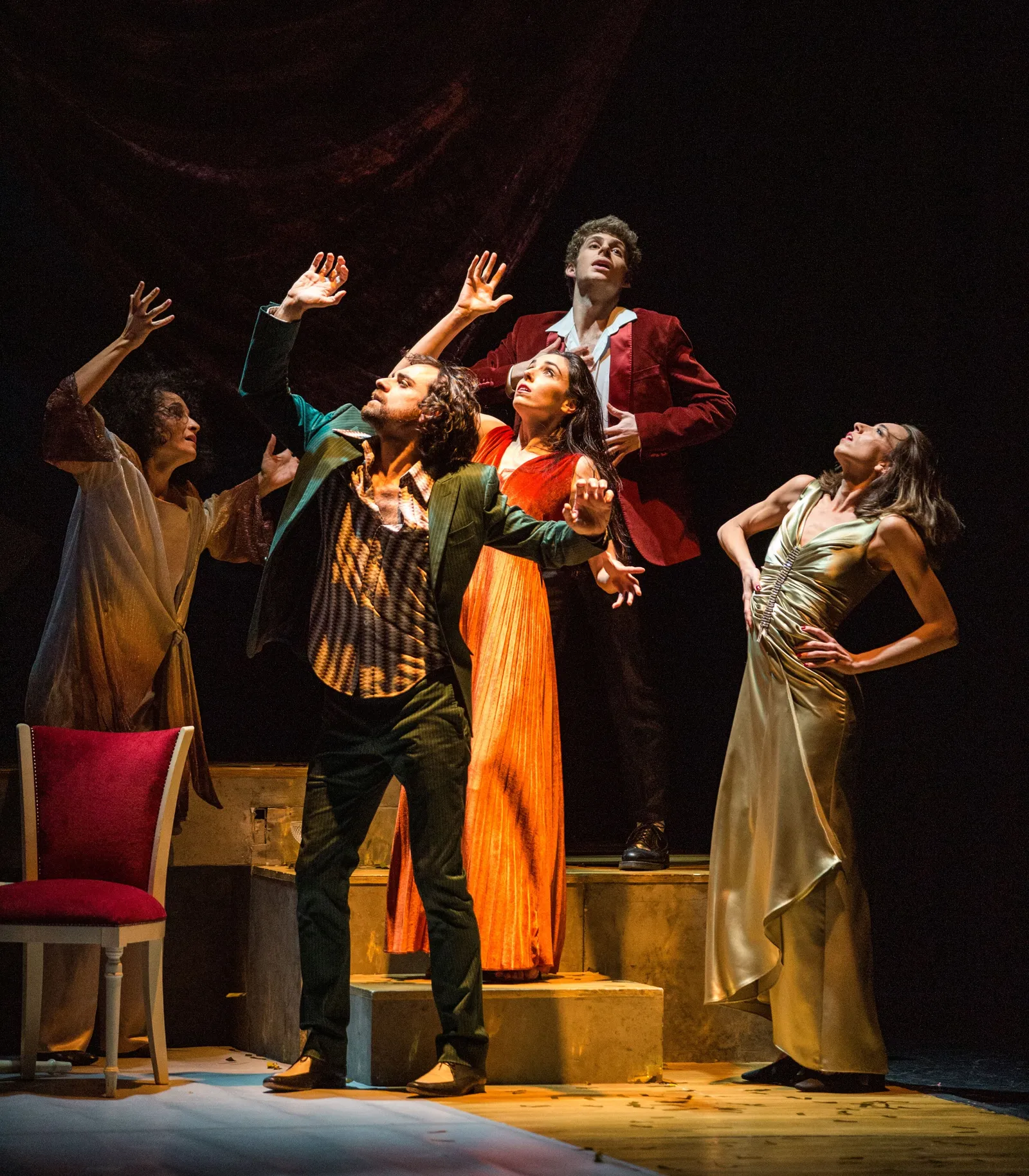
REVIEW
OPERA WORLD | 19/01/2021 | Cristina Marinero The truth is that any stage project starring Ángel Ruiz begins from a privileged position. The actor, whom some now identify with his Federico García Lorca in the series El ministerio del tiempo, is out of this world. He does everything well. Were he in Hollywood, he would be a Billy Crystal or a similar talent. So when the performance of Fandangos y tonadillas begins, a co-production premiered at the Teatro de la Comedia by the Compañía Nacional de Teatro Clásico (CNTC) and the Compañía Nacional de Danza (CND), and he appears, life is more beautiful. Always.Directed on stage by Laura Ortega and musically by Alicia Lázaro, Fandangos y tonadillas is a playful, sensual visit to the spirit of eighteenth-century Spain, in which the music of Boccherini, Blas de Laserna, Pablo Esteve and Antonio Soler is set within a staging of no defined time, no specific period. Also on stage, the superb playing of the sextet of strings and harpsichords made up of Beatriz Amezúa, Marta Mayoral, Laura Salinas, Alicia Lázaro, José Ignacio Gavilanes and Silvia Márquez.
Ángel Ruiz, as the opening master of ceremonies, introduces us to this celebration, which brings out the value of the musical and dance interludes of the popular performances offered in the eighteenth century from New Year to Lent, passed through a contemporary sieve. This is especially so in the dance, where the choreographers Pau Aran (guest artist of the Tantztheater Wuppertal, founded by Pina Bausch) and Mar Aguiló (who continues her path as a creator, having co-choreographed Arriaga for the CND last summer with Joaquín de Luz and Pino Alosa) extend their repertoire of expressive movement across the ever-delightful notes of the composers of the Age of Enlightenment.
The dancers Yoko Taira, Isaac Montllor, Sara Fernández and Iker Rodríguez, together with Aguiló, share the stage, along with Angel Ruiz, with the singer-actors María Hinojosa, Cecilia Lavilla and Rafa Castejón. They move as a dynamic accompaniment in some of the scenes, but are also true protagonists of certain pieces, combining their movement with attitudes that are by turns amusing and sensual, and always timeless. And watching the quality of Iker Rodríguez's movement is a celebration in itself, because his bodily deconstruction joins with his beauty and heightens his charisma. The young CND dancer is made for Mar Aguiló's articulated style, and the two of them, together with Sara Fernández, bring Boccherini's Fandango close to a sensuality very much like Robert Palmer and his nineties Simply Irresistible.
The spirit of Fandangos y tonadillas takes us travelling through time by way of the song lyrics, quasi-documents of the atmosphere of the eighteenth century that turn their focus now on the public, those strollers of Blas de Laserna's Las murmuraciones del Prado, now on the hardships of the comic actors in the periods when the theatres were closed at the end of the century (Arbitrio para comer, by Pablo Esteve). The common thread is a slender plot that starts from Ramón de la Cruz's El italiano fingido: for the protagonists to have a good time, they need a tenor. And all of it is lit by Irene Cantero, with dramaturgy by Juan Menchero and the ever-delightful Passacalle from Luigi Boccherini's Música nocturna de las calles de Madrid, as well as his Ritirata, which in the end puts us in front of the mirror of that moment, when there was also a curfew.
LINKS
Review in Opera World: Fandangos y tonadillas: dance, music and declamation with the playful, sensual spirit of eighteenth-century Spain